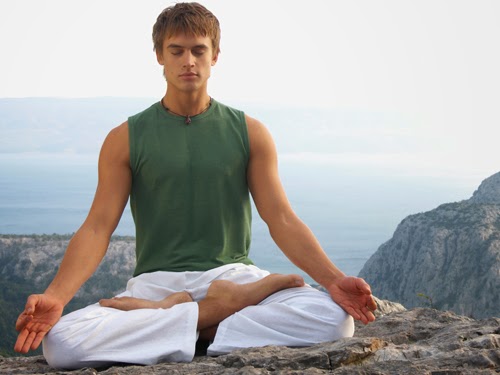
Showing posts with label meditate. Show all posts

Thursday, August 13, 2015

What Is Remote Viewing And How Does It Work


Have you ever wondered what it would be like to be able to see things that you normally could not? Well, we have previously discussed astral projection and how it can do these things, but there is another way that can give you the power to use the mind to access specific targets, and in higher levels, targets that are in different time periods: remote viewing.

What Is The Difference Between Astral Projection And Remote Viewing?

Astral projection and remote viewing are very similar, in the sense that it allows the user to travel through space and time without actually having their physical body do so. But the stark difference between the two is that astral projection projects the astral body out, giving an out-of-body experience, whereas remote viewing is the controlled use of extrasensory perception, or ESP, through a specific method, to perceive the target from great distances and even different times.

Another difference is that astral projection requires the user to fall asleep, thus a lot of time and preparation to be able to perform. Remote viewing sessions, however, are only about an hour or so, pretty much allowing the user to perform it at their convenience.

One key similarity between the two however is that, unlike ESP and innate psychic abilities some people have, both astral projection and remote viewing rely on learned steps to perform, which means anyone can learn the skill and do it as needed.


Enjoy the benefits of meditation in just 15 minutes!

How Does It Work?
There are many theories surrounding remote viewing and how it works. Some experts in the field say that remote viewers tap into the “Universal Mind”, a cosmic database, if you will, where all information is stored that span space and time. Another theory is the “hyperconscious state” theory wherein the remote viewer can tune in, like a radio, on specific targets within the universal consciousness that ties all living things together. One more theory is the “virtual reality traveling” theory that allows the remote viewer to simulate an astral projection, but not really; the viewer is simply tapping into the cosmic energies that permeate everything in order to observe their targets.

 
Is It All Fake?
Skeptics abound claim that remote viewing is just “new age horse dung”, but throughout modern history, remote viewing has been observed and tested numerous times, that during the Cold War, both the US and the Soviet governments have devoted departments and funds to further its study and usage.

One famous case is that of Ingo Swann, who correctly remote viewed back in 1973 that the planet Jupiter had rings, at a time when it was Saturn that was known for its rings. Skeptics all claimed fakery, until later space probes confirmed his claim.

Many de-classified documents from both governments have confirmed experiments done by the CIA and the KGB to weaponize remote viewing and to use it in their militaries for their advantage. Documents contain everything from highly detailed and accurate descriptions of distant and classified facilities from both countries, which would not have been known otherwise except through actually being there and seeing it.

It is said that these governments continue to use remote viewing, despite claiming otherwise.


The Ayurveda Experience will give you the insights to live a healthier, happier life!

What Is Needed To Remote View, How Is It Done

There are 5 key elements necessary for remote viewing:
1.)    A remote viewer
2.)    Active ESP abilities
– these abilities may be latent, or awakened, which most people will have to do if they are not naturally psychic
3.)    A specific target – these targets may not be known to you in detail beforehand, but you have to have some idea on what you want to view.
4.)    The viewer’s recorded perceptions – it is important to record what the viewer sees for later confirmation.
5.)    Confirmatory positive feedback – this is to ensure that the remote viewing worked and that the viewer did not end up perceiving something different.

There are many methods that can be used to start remote viewing. Just like martial arts, there are different styles. The three most common are:

1.)    Controlled Remote Viewing (CRV) – this is the method used by Ingo Swann and the one adopted by the military.
2.)    Scientific Remote Viewing (SRV) – the method created by Courtney Brown of the Farsight Institute
3.)    TransDimensional Systems (TDS) – created by former Farsight Institute member Prudence Calabrese.

We will be tackling each method and style in full detail in future posts, but what all three have in common are the following:

1.)    It requires the need to empty the mind – this can be done via meditation and other methods, but before the remote viewing can begin, your mind has to be empty to receive all the information that your viewing will give you.

2.)    Controlling the imagination – it is imperative that the imagination be kept quiet and still, as it is an easy tendency for a viewer to fill in the gaps with ideas that come from within, and not from without. A viewed target may appear incomplete to the beginner, and it is easy for the viewer to invent things subconsciously to fill in the gaps – this is human nature. So it is crucial to control this.

3.)    Ability to interpret the viewing – whether through words or illustrations, efficiently interpreting the viewed target is crucial as it is also necessary to properly translate what is seen by the mind so it is the same as what will be seen by others.

Remote viewing is a powerful skill that can be learned by everyone. Tune in to our detailed remote viewing guides in future blog posts. Do you think you have what it takes to do remote viewing? Set the tone with our new binaural beats track for remote viewing here:


Using a complex binaural beat frequency mix that ranges and flows from 4Hz to 8Hz, and an isochronic tone of 5Hz, the Theta range brainwaves assist and encourage the state of mind to enhance imagery, creativity, visual recall, zen meditation, and access to the subconscious mind while reducing mental fatigue. There have been brainwave studies that would confirm that a person can reach astral planes through a sequence pattern of multiple frequencies. This track contains triggers that can assist in helping you reach a state of deep meditation, which is the gateway to do astral projection and remote viewing.

Related Articles:
The Astral Plane And The Silver Cord  
The Beginner's Guide To Astral Projection (Part 1)
The Beginner’s Guide To Astral Projection (Part 2)

Transcending Barriers: Explaining The Religious Ties And Answering The Supposed Dangers Of Meditation
Meditation Improves Business Productivity
Meditation for Physical Performance
4 Kinds Of Meditation That Will Bring Your Business To The Next Level
Group Meditation Is The Untapped Team Building Activity To Increase Productivity


Check out these amazing products:
Learn the skills to unlock lucid dreaming fast and easywith the Lucid Dreaming Fast Track!
The most advanced lucid dreaming supplement today. Join the lucid dream revolution!

http://www.amazon.com/gp/product/193049114X/ref=as_li_tl?ie=UTF8&camp=1789&creative=9325&creativeASIN=193049114X&linkCode=as2&tag=braipowemusi-20&linkId=HEVLNJ5C4JI4NGR3
Lucid dreaming guide to the inner self


Wednesday, August 5, 2015

What Is Mindfulness?


Ever head the phrase “be mindful of those around you”? What exactly is being mindful all about? More specifically, what is mindfulness, a word that has been associated with everything from enhancing meditation to achieving many things like weight-loss and success? Let’s find out more.


A Path To Enlightenment

Mindfulness, as many of us know it simply from our vocabulary, means “to be mindful”, to have awareness, attention, and focus on certain things. It is to be able devote the mind to be aware and be able to perceive things properly.

But in the community of wellness, meditation, and spirituality, mindfulness means something more. It is not just a state of mind, but is also a practice, to be able to sharpen one’s focus and awareness to be mindful of whatever is happening around, to be fully in the moment so one is able to pay attention on purpose, as if every passing second is crucial to one’s life. It is the ability for one to engage all their senses even in the simplest situations, to fully absorb all the stimuli the universe has to offer.

In a way, it can be defined as a stepping stone towards the Buddhist idea of enlightenment, which is a state of being where the attentive awareness of the reality of things has been reached, allowing one to truly overcome the evils of the world like greed, anger, delusion, and more.


A More Practical View

While many have embraced mindfulness as a fully spiritual and cosmic state of being, many psychologists in mainstream science have also accepted mindfulness, although in a more practical sense. Many of these psychologists define mindfulness as having these three important pillars:

1.)    Seeing things beyond normal – in layman’s terms, thinking out of the box, going beyond existing labels of people, objects, and events, that are given by society, to be able to always see beyond what things are just “supposed to be.” For example, a rock is not just a rock, it is also an art piece, a primitive tool, a toy, a small piece of a bigger whole.

2.)    Focusing on the means and not just the ends – in today’s results oriented society, the bottomline is often the goal, regardless of how one gets there. But by being mindful of each step, on the process rather than the result, one is able to grow as a person and not simply be a slave to the rewards. For instance, a student who is more focused on getting an A in a test may resort to cheating or other nefarious means, whereas a student who is more focused on learning, may get an A in the test as a result. The latter is more mindful.

3.)    Open mindedness – the ability to always welcome new information and facts, rather than being unreasonably stuck in one’s own old, outdated, or even wrong beliefs, allows for proper growth and fully experiencing the universe for what it truly is. To be able to do this, one should always be open minded, as well as see things from other people’s points of view, to constantly learn.

So for the Western and scientific communities, mindfulness is about being fully aware of every single experience, which, when seen side by side with the Buddhism-inspired idea of mindfulness, becomes much more similar to one another.
Learn about mindfulness in an easy, concise manner here!


Benefits Of Mindfulness


Mindfulness has a number of benefits that are beyond what is listed here. In general, it can help one become more aware, more focused, more immersed in each experience, and overall can lead to a happier, more fulfilled life. It also has the effect of giving one more control of their life.
In addition, it can also do the following:

1.)    Improve health and weightloss – by being mindful of the food one eats, as well as fully experiencing the eating process rather than just gorging on as much food as possible.

2.)    Improve brain function and benefits – mindfulness practice (which will be discussed below) can improve brain activity.

3.)    Better decision making – being mindfully aware of different things causes the brain to lessen if not eliminate its bias on old ways and allows one to make better, more realistic decisions.
There are many other benefits of mindfulness, which will be discussed in a future blog post.


How To Practice Mindfulness

Mindfulness is not an on-off skill. Nor is it simply an end-goal as a state of mind. It is something that is constantly grown and nurtured for the rest of one’s life.

One can practice methods such as mindfulness meditation, which can actively train the mind to be more mindful, but it has to go beyond that. Actively pulling yourself to be mindful when distractions pull you away have to be done. Like, when you find yourself eating too fast, slow down and savor each bite. Before reacting in a conversation, take a short pause, process what is said, and then respond. Things like this can help you be more mindful and cultivate mindfulness.

As mentioned earlier, mindfulness meditation can help improve this. A basic process for mindfulness meditation is as follows:

1. sitting in an upright posture with legs crossed and gaze low.
2. recognizing natural thoughts and complex thoughts.
3. removing all past and future concerns and problems from the mind.
4. breathing properly and using it as an anchor to the present.
5. allowing the mind to rest.

To further improve your mindfulness through mindfulness meditation, listen to this binaural beats track for deep meditation.


Meditation can be done in various ways. One way is with the use of music embedded with binaural beats, such as this one which was created with frequencies of 8-13Hz and 108Hz. Found within the Alpha range, it pertains to a tranquil state of consciousness that affects the inward awareness of the body and mind.

Related articles:

Meditation Improves Business Productivity
Meditation for Physical Performance
4 Kinds Of Meditation That Will Bring Your Business To The Next Level
Group Meditation Is The Untapped Team Building Activity To Increase Productivity 
Transcending Barriers: Explaining The Religious Ties And Answering The Supposed Dangers Of Meditation


Check out these amazing products!
The Ayurveda Experience will give you the insights to live a healthier, happier life!

Learn the skills to unlock lucid dreaming fast and easywith the Lucid Dreaming Fast Track!


Friday, July 10, 2015

Mind Over Matter: How To Use Meditation For Addiction And Cravings


There are many pleasures available to us in life, from food, to sex, to alcohol, to sporting and leisurely activities. And while having regular doses of these things is a good thing, as it keeps us happy, sometimes the frequency of these desires becomes beyond what is normal, to the point of desiring them without really thinking of the possible consequences. This is when simple desires become an addiction, and addictive cravings can be very hard to resist, especially when both the mind and body are hooked. There are many ways to deal with addiction and cravings, but one such way you can do on a regular basis is “mindful meditation.”

Why are cravings strong?

Depending on what is being craved for, a craving is strong because it comes from the subconscious, after consciously satisfying the body and mind with a certain thing or activity. And when something is desired by the subconscious, it can be very hard to break free from it.

One of the big reasons why cravings are so hard to break off of is the association between the craving, and the reward. Many of us experience rewards on a daily basis, but addicts and cravers desire the rewards beyond simply just liking them. And that's what makes a craving and addiction so powerful, because many times the rewards are thought to be unreachable through any other means.

What is mindfulness?

Put it simply, mindfulness is exerting effort to focus one's attention towards something specific. Thoughts that may end up distracting the person are deliberately nudged away to be able to focus. This is usually associated with time, focusing one's attention on the present moment, but can be used for everything else.

When mindfulness is used as meditation, that is, contemplating in a peaceful yet controlled manner, the addiction and craving, it can be a very powerful tool. It is composed of three key elements: remembering, being aware, and putting attention to it. The person needs to be aware of the craving they wish to take control of, put all their attention to it, and remember why they want to take control of it, keeping it in its place.

What mindfulness does in terms of cravings and addiction is they become better in living in the present, not worrying about the future rewards when they satisfy their addiction and not feeling bad about the past givings-in to their cravings. This helps them get rid of the wrong pleasant emotions they feel when they give in to the cravings, and the unpleasant emotions of guilt afterwards.

More importantly, mindfulness meditation increases the person's ability to be more aware of the cravings they are trying to get rid of, or avoid, or reduce. This goes hand in hand with their self-awareness, which has an overall benefit for the person, as they are able to be more accepting of themselves, which leads to less stress and anxiety, and give them more control of their emotions, which in turn strengthens their resolve against their cravings.

It is the exact opposite of what a vicious cycle is!

How to perform mindfulness meditation

Mindfulness meditation is done almost like any other meditation method, which we outlined in a previous blog post here. But in general, it involves the following basic steps:
- Sitting comfortably with good posture, depending on the kind of meditation selected.
- Controlled, deep breathing to relax the mind and body
- Focusing on the breath and nothing else (at least in the beginning.) Anything related to the breathing (how it fills the lungs with air, how the air rushes in the nostrils, for example) can be used as focal points.
- When the mind begins to wander, or more importantly, think about the craving, this is when extra steps are to be taken. Depending on your level of mindfulness or control, this can be any of the following:
      1. ) gently nudging your mind away from thinking about the craving and focusing on the breathing.
      2. ) focusing on the triggers of the craving. Why did you think and feel about the craving despite meditating and focusing on the breathing?
      3. ) recognizing the emotions that arise from feeling the craving. Did you feel excited at the prospect of giving in? Do you feel angry or frustrated that you're meditating instead of indulging?
      4. ) taking control and telling yourself that you are not your craving and your addiction, and that you dictate whether or not it makes you happy.

Ultimately, mindfulness meditation is really about what the name implies: being more mindful. It is about focusing and recognizing the craving, and dealing with it. Try it for anything that you feel is starting to take control of your life, rather than the other way around, and it can do wonders! To help you, you can listen to a binaural beats track for focus so you can laser pinpoint your craving and take control of it. Like this track here:


Related articles:

Check out these items that will help with your lucid dreaming!

The most advanced lucid dreaming supplement today.
Join the lucid dream revolution!
Lucid dreaming guide to the inner self

Wednesday, July 1, 2015

Transcending Barriers: Explaining The Religious Ties And Answering The Supposed Dangers Of Meditation


As a form of relieving stress, improving productivity, and gaining deeper personal understanding, meditation has been gaining popularity in recent years, now being used by everyone from Yoga practitioners to CEOs of major corporations. But despite its rise in the popular culture, many people still misunderstand, and sometimes even fear and dislike, the idea of meditation. This is due to lack of information or even misinformation spread about the practice. Today, we’ll discuss what meditation really is about and why it transcends the barriers of religion, race, culture, and lifestyle.


What exactly is meditation?

As we previously discussed, meditation is a state of mind wherein it is emptied of whatever may trouble or disturb you, to pause and be at peace with oneself and be calm. By this definition, something as simple as sitting down and relaxing in silence, to something more complex like doing calligraphy, can be considered “meditation.” But the most common practice is that of finding a space where one can be quiet and undisturbed, and simply relaxing and being at peace.
Now, this is where the definition ends (in a simple manner) and the speculation and misinformation begin.


Meditation and religion

Meditation is not a religious practice, and does not denote that you are following a specific religion. However, different religions actually have their own ways of meditation, whether it is acknowledged as such or not.

For example, in the Hindu mantra meditation is very similar to the Christian rosary prayer, with both constantly repeating a specific verse and prayer in a solemn manner.
Judaism’s Qabalah, which is Hebrew for “to receive and reveal” follows a tradition that requires the students to transform their inner selves with the external, assimilating symbols’ characteristics via meditation.

Islamic tradition requires a Muslim to pray at least 5 times a day, during which time they focus and meditate on God by reciting the Qur’an, strengthening the ties between God and man.

And then there’s Buddhism, where Buddha himself, Siddhartha Gautama, is known to have reached enlightenment while meditating under a Bodhi tree. Different variants of Buddhism, such as Zen Buddhism, emphasize the importance of “emptying the mind” in their practice of Zazen, or Zen meditation, wherein the person stays in a seated position similar to Siddhartha, to allow the unconscious mind to be one with the universe.

There are many other religions and variants thereof, with their own versions of traditional meditation, even though it is not formally called as such. But the basic principle is that if it is a solemn practice, that requires some form of spiritual connection, involves either introspection or extrospection, and aims to bring mental peace and calm, it can be classified as a form of meditation.


Meditation is dangerous? Makes you prone to evil influence?

There are some groups of people who fear that the spiritual connections done during meditations make cause the meditating person to be prone to evil influences, whether it be demonic possession, or becoming a portal for evil spirits, or simply tapping into dark desires that lay dormant within. Others fear awakening supernatural powers, like being psychic or opening the third eye. And then there’s the fear of awakening the kundalini, also known as the “serpent spirit” and the root chakra.

We will discuss these dangers in a future post, but right now, all you need to know is this: these are all merely hurdles, distractions, and possible fears for your meditation session. As with all kinds of meditation, focus is key, and to lose focus due to these distractions and fears is to hinder your meditation progress.

Also, remember that meditation induces certain brainwave patterns, and each one has side-effects if there is an imbalance in the amount produced.  Included in these side-effects are seeing visions and hallucinations, experiencing feelings of dread and fear, as well as a gripping sense of anxiety. All of which may be attributed to the supposed dangers of meditation that are being spread by those who have had meditation experiences that have gone astray.

As with all things, focus and understanding are keys to achieving a fruitful meditation experience. Binaural beats can help with this as it regulates and induces the right amounts of brainwaves to enhance the meditation experience. Try it out with this binaural beats track for spiritual meditation, which will quiet the mind and reduce if not entirely eliminate the risks of meditation.

Thursday, June 25, 2015

4 Kinds Of Meditation That Will Bring Your Business To The Next Level


Meditation has many different benefits for business and work, as we have discussed in a previous blog post: it trains the mind to be focused and clear of distractions, makes it more goal oriented, and so on. Meditation benefits businesses so much that giants like Google have made it part of their operations. But what kind of meditation should you use for yourself, for your work, your employees, or your business? Below are 4 of the best kinds of meditation for businesses that you can choose from.

1.) Zen Meditation - tracing its roots in the Chinese Zen Buddhist tradition and all the way back to Indian monk Bodhidharma, Zen Meditation is a very deep, somber kind of meditation whose aim is to keep the mind empty of thought. It relies heavily on keeping a proper posture as a way of helping the person concentrate, and not be distracted by many different things.

Steps:

  •  Find a place where you can sit, either on the floor over a mat, pillow, or some other cushion in a crossed-leg position, or on a nice comfortable chair with an upright backrest. Those who want to do this in the more traditional manner can go in a lotus or half lotus position, although this can be quite a challenge for beginners. 
  • It is important that the back is kept upright and straight, with the eyes focused on the ground in front of you (around 3-4 feet on the floor) and the mouth completely closed, breathing mostly through the nose. 
  • Focus on the breathing, slow, steady inhales and exhales that are of the same pace all the way. If this is difficult to do without any distractions, find a point on the floor where your eyes can focus, and keep looking at it as you breathe. Try to drown out everything else, be as empty and steady as you can, and just “be”.
2.) Mantra Meditation – Often used in Hindu tradition, a mantra may be a syllable, word, or in some cases, phrase, although phrases are only often used when trying to use the mantra as a form of affirmation. The mantra is then the focus of the meditation, feeling the vibration of the syllable or word when pronounced, and absorbing its meaning in the process.

This kind of meditation is especially useful for minds that are full of random thoughts, doubts, or full of high speed activity. This is because consistently pronouncing the mantra takes  effort, and in doing so, pulls the mind away from whatever is bothering it.

Steps:
  • Like Zen, find a spot where you can sit comfortably, usually on the floor in a crossed-leg position. Make sure that your spine is erect from the hips to the nape of the head.
  • Close your eyes, take a deep breath, and pronounce the mantra. The pronunciation is usually as long as your slow exhale (in fact the mantra is often a substitute for an exhale) and can be done consistently over a set period of time. 
  • The pronunciation of the mantra is from deep inside the body, and will cause mental and physical vibrations. Be aware and absorb the vibrations as they happen.

3.) Qigong (Chi kung) Meditation – defined literally as “life energy cultivation”, Qigong meditation is one that integrates mind and body. Qigong as a whole can be used for a number of things, from martial arts to simple exercises, but is also used in meditation, and focuses on a variety of breathing and muscle control techniques. We will discuss the exact details of Qigong Meditation in a future discussion, but in general, Qigong focuses on the “Qi”, or “chi” as it is known in the West, the vital energy.

Qigong Meditation is perfect for those who seek both a mental and physical kind of meditation, as it can be integrated in different movements should the need arise.

Steps:
  • Sit in any comfortable position, although the traditional meditative position is the best.
  • Relax and calm not just your mind, but your body. Feel your muscles relax, your internal organs slow down, and your nerves be less tense. Regulate the breathing to make it slower, deeper, longer, and softer. 
  • Internalize and focus on the body’s center of gravity, called the “lower dantien”, and is located around 2 inches below the navel. Keep focusing to gather vital qi into it. The dantien is the natural gathering place of vital energy, and focusing on it is the key to build qi there.
  • Visualize and then feel the qi coursing through your body, rejuvenating it along with your mind.

4.) Self-investigative Meditation – A form of meditation tracing its roots in old Hindu traditions, Self-Investigative or Self-Enquiry meditation seeks to uncover who a person truly is, from the inside. The goal is to learn the “True Self”, which can only be found by internalizing and getting answers from the inner self.

This is a good form of meditation for professionals who are at an impasse with their careers, whether due to self-doubt, or due to a desire that they are not sure of, as it answers the very fundamental question, “Who Am I?”

Steps:
  • Start by following the basic setup from the previous meditation styles: sitting properly, controlled breathing, and emptying the mind.
  • But instead of a mantra, or breathing, or qi, focus on internally asking the question, “Who Am I?” or the phrase “I Am…” This will be your focal point.
  • Ignore any impulse to verbally answer or affirm these. Simply use the phrases as an anchor deep within, and repeatedly ask or say it until the True Self answers back.
  • If there is even a slight feeling of bias from the answer, discard it, and ask again. You will know when the answers are revealed by the True Self when it feels unconnected to any concept or bias, when it is beyond any intellectual, financial, practical, and emotional pursuits, and is simply a pure feeling of being one with the True Self. This may take a  lot of tries, as it seeks to answer a very introspective question, but the process itself already yields the benefits of meditation.


These are the 4 best kinds of meditation for business, as each one seeks to tackle each of the fundamental issues of business. To aid in your meditation, binaural beats tracks can be used, such as this binaural beats track for meditation and success in attracting money here:


Check out these items that will help with your lucid dreaming!

The most advanced lucid dreaming supplement today.
Join the lucid dream revolution!
Lucid dreaming guide to the inner self

Wednesday, June 24, 2015

Meditation for Physical Performance


We previously discussed how meditation can help in business, whether as a business owner, a manager, or as an employee. But the same benefits that businesses can enjoy from meditation, also translate to one’s physical performance, whether in sports or just recreational activities. In fact, meditation is now being integrated into sports training programs offered by different trainers, just like how binaural beats are being used as part of mental conditioning. It is a logical path to take, seeing as how an athlete or a fighter cannot win if they are already mentally weakened by different factors. And this is where meditation comes in.


Not a new concept

Meditation for physical performance is actually not a new concept. In fact, it is perhaps as old as the idea of meditation itself! In ancient times, warriors would spend time focusing their thoughts and emptying their mind of fear and distraction in order to be better fighters. In times of peace, the same ancient warriors who compete in friendly competition did the same before a match. While the process done by our ancient ancestors does not exactly fit the idea of meditation as we know it today, the fundamentals, and the results, were the same, although back then, it was understood as a spiritual effect. In modern times, many athletes refer to the time they spend alone, in silence, before a match, as “being in the zone” without realizing that they are actually tapping into the principles of meditation.

Eventually, athletes and their trainers discovered scientifically why meditation worked in training the mind to function properly during an athletic or physical performance. Russians started the idea of “neurogenic conditioning” in which the nervous system of athletes were deliberately trained and conditioned in order to improve their functioning, and part of this training included meditation.


Why it works

Aside from the aforementioned benefits of brainwave therapy through meditation we previously discussed, wherein meditation helps produce brainwaves in the right amounts to achieve different results, meditation done for sports or other physical activities conditions the mind the same way muscle memory training conditions the body.

A mind that is full of doubt and other thoughts that can impede the functioning of a bodily process can cause that said process to not be executed at 100%, resulting in sub-par performance. But emptying the mind of those doubts and distractions is not simple and easy, and can only be done by constantly practicing meditation, whose effect is to remove all unnecessary thoughts to achieve a state of relaxation and peace.

But why does the mind being empty help in physical performance?

Because it allows the mind to use up all its capacity to command the body to perform at its fullest.
Picture this. Have you ever tried cutting a piece of paper down a straight line with a pair of scissors, only for the cut to be crooked whenever a random thought enters your head, or you suddenly have a doubt about your next movement?

That is how meditation can help the athlete. Regular practice of meditation allows the athlete’s mind to stay solid and be calm regardless of whatever scenario it is put in. This is most especially valuable in high pressure events, wherein the slightest self-doubt or the smallest distraction can mean the difference between losing focus and losing, or staying focused and winning.

But as mentioned above, it is not just beneficial to athletes. Soldiers, policemen, emergency services personnel, doctors, dancers, firefighters, and all the other professions that require a lot from the body’s capabilities to perform, can benefit from meditation.


How is it done?

Traditional meditation methods are the most common ways to practice meditation for physical performance. Usually done before or after a training session, and before an event, one can find a nice quiet place to stay in, sit down, and perform the basic meditation techniques we discussed in our previous post, by focusing on slow, deep breaths, and trying to empty the mind.

But there’s another form of meditation that can be done by athletes: having a mantra.

Having a goal as a mantra, and repeatedly thinking about it as one practices, aids in mental conditioning and helps clear the mind when that specific action is done. For instance, a coach makes a comment to a basketball player’s jump shot, telling him to “roll the ball” as they release it. Constantly repeating “roll the ball, roll the ball” in the mind during practice, can have dramatic results.


Not just for athletes

Meditation employed in this manner is not just for athletes. Anyone who enjoys any physical activity, and wants to be better and better at it, can use meditation to reap its benefits. So start meditating today! Listen to this binaural beats track for meditation to motivate and promote positivity and success, and improve your performance ASAP!


Check out these items that will help with your lucid dreaming and more!

The most advanced lucid dreaming supplement today.
Join the lucid dream revolution!
Lucid dreaming guide to the inner self


Monday, June 22, 2015

Meditation Improves Business Productivity


Many people often associate meditation with spirituality, finding inner peace and achieving nirvana, and only done by those following a certain religion, or a practitioner of a far-eastern martial art. It is so old fashioned, that it’s something that no one in the modern world has time for, right? Well that couldn’t be further from the truth, because science has shown that meditation has its place in modern society, and one such place is, as we will be discussing, so unlikely that those not in the know might not even expect it: Business.


What is meditation?

Depending on your source, meditation may have different meanings. But each has one thing in common. Meditation is a state of mind wherein it is emptied of whatever may trouble or disturb you, to pause and be at peace with oneself and be calm. Contrary to popular belief, meditation is not an action: it is a state of mind and awareness; often we can see someone trimming some plants, doing calligraphy, or some other similar act, and still be meditating just the same as someone who is in a lotus position in a garden. But the latter is the common image and way of performing meditation.


How does it help me in business/work?

The main benefits of meditation for business, both for employer and employee are very valuable. In fact, meditation, as it was discovered by the Harvard Business School, and INSEAD, Europe’s top business school, is one of the two most effective business tools for executives and employees (the other being intuition.) Meditation affects the individual, going up to the team, and all the way to the entire business organization, all the while positively influencing each branch to bring overall results.

Meditation actually helps solve the four key components for a successful business, namely:

  1. Coming up with, and adhering to a clear vision of the business’ goals
  2. To be inspired and innovative in the way they provide their product or service to the market
  3. Proper leadership
  4. Solid teamwork

And it does so by doing the following:


Benefits of meditation


  1. Stress relief – one of the things that can bog down a person’s productivity the most is stress. Stress caused by overworking, or anxiety about deadlines, can compound the problems further, bogging down the business engine even more. And stress can actually affect the person physically, causing loss of energy, slower thinking, and even other health issues. Meditation relieves stress and rejuvenates the mind to be able to do what needs to be done.
  2. Improved focus and creativity – stress in work is caused by many things, and one of these is being unable to solve problems. Meditation helps this by calming the mind down, emptying it of unnecessary thoughts, and allowing the person to be mentally and emotionally well enough to focus on the problems at hand. Being creative allows the members of the business to be able to solve problems faster and more efficiently, leading to success which will provide boosts in morale and lead to even more solutions being thought of.
  3. Better mental and physical health – the rigors of work and the stress that it causes can affect a person’s mental and physical well-being, from anxiety and insomnia to heart ailments and complications. Some employees have even been known to develop clinical depression! This can cause problems at work ranging from inability to achieve targets, to absences, to bad relationships with co-workers, which all lead to loss of productivity. Meditation calms the mind down, resets the heart rate to a healthier level, and reduces the risks of physical and mental problems. 
  4. Better employee teamwork and relationships – staff members who meditate, whether individually or together, become more calm and easier to work with, due to their relaxed, peaceful state. This leads to better teamwork, which is critical in any business venture. Not only that, a good demeanor leads to people respecting each other better, with employers being able to trust their employees and employees being more motivated to deliver for their employers. 


What’s the science behind this?

Some may think that this is nothing more than some new-age idea embraced by some businesses as a fad. But rest assured that, if big companies like Google use it, there is a science behind it. And there is!

Our previous blog posts talked about brainwave patterns and the benefits of brainwave therapy like binaural beats. There’re Alpha Waves, which govern the brain’s cognitive, creative, and problem solving abilities, Beta Waves, which govern the brain’s focus, fight or flight response, and logic, and Delta Waves, which control the body’s healing capabilities and involuntary processes (like heart rate and breathing.)

Being able to produce the said brainwaves in the right amounts and right combinations will allow the mind to reap all of its benefits, and one way to do this is… yes, meditation.


Basics of meditation

There are many ways to meditate, and we will discuss the different methods in a future post soon, but for now, here are some basics to get you started.

First, find a plane surface you can sit straight on. Close your eyes, try to relax, and breathe slowly, in and out. To help empty your mind, focus on your own breathing, and nothing else. If you get distracted or are unable to focus, block it out, and keep your focus on your breathing. Do this for as long as needed until you feel better and relieved.

To increase your chances of being able to focus, the venue is important. If you have your own office at work, lock the doors, put a no disturb sign, close the blinds, and sit on the floor. If you don’t, find a room in the workplace where you can be alone, and do the same. If you’re a business owner, devoting a room for meditation can help your employees do this.

And finally, using binaural beats for meditation to motivate and success definitely helps. Try to listen to this track and it will definitely make you more relaxed and focused on your meditation.


Check out these useful items that will help with your lucid dreaming and more!

The most advanced lucid dreaming supplement today.
Join the lucid dream revolution!
Lucid dreaming guide to the inner self

Thursday, March 26, 2015

Harvard Scientists Found Something Surprising About People Who Meditate

 Visit Our Website


Harvard Scientists Found Something Surprising About People Who Meditate


Did you know?

Science found new studies to prove the benefits of meditation to people. Yes, it’s true! Every day a new study is being released proving more and more of its great effects to humankind.

Harvard scientists discover that meditation is so powerful it can change the physiology of human’s brain, resulting in progressive changes like a decrease in anxiety and depression.

Scientists gathered 24 participants that have no experience in meditation within an eight week program on best practices for “mindfulness based stress reduction (MBSR)”.  The program consisted of 2.5 hour sessions each week where participants learned “body scanning, sitting meditation, walking meditation and mindful stretching movements”. On the other hand, scientists also requested each participant to perform at least 45 minutes of boot camp and let them undergo a series of psychological evaluations to examine their anxiety and stress levels before and after the MBSR program.

These results were compared to a control group who went through no meditation training at all during the eight weeks.

Through these tests, scientists demonstrated the comparison where meditation made parts of the brain corresponding to emotion and perception thicker that eventually resulted in a significant after-training reduction of several psychological indices related to worries, anxieties, depression and alexithymia.

In this study, meditation has a very big factor to make more people emotionally accustomed and less depressed. This is really a good argument to spend time quietly reflecting every single day.

Meditation and other forms of relaxation and mindfulness not only can change our immediate state of mind correspondingly, but can also control the stress levels and ability to emotionally relate to ourselves and towards others. Mindfulness meditation has also been shown to help people with social anxiety disorder and proven benefits in stress reduction.


Meditating 20 minutes, twice daily will help you stay calmer, relieves anxiety, make better choices, and connect to a deeper place within. So, try our Meditation Music : Amazing Brain Sound Dopamin Booster Pineal Gland Activation video to fully satisfy your senses.


SUBSCRIBE To Our Channel & Be the First to Listen to our Newly Uploaded Tracks!


~

If you liked Brainwave Power Music's original audio tracks, you can give your support by donating via the Paypal Donate button below, and it will help the team continue making more music.

Thursday, March 19, 2015

What is Loving-Kindness Meditation?

 Visit Our Website


What is Loving-Kindness Meditation?


Loving-kindness meditation is a method of growing compassion. It is a tradition of a Buddhist, and it is getting used by everyone, regardless of religion.  Loving-kindness meditation is about cultivating love. This is a meditation of sympathy, compassion and friendship. It is a feeling of sincerity for oneself and others. The practice is the relaxing of the mind and heart, an opening to deeper levels of the feeling of kindness, of pure love. Loving kindness is not a sentimental feeling of goodwill, not an obligation. It does not depend on relationships, on how the other person feels about us. It is about relaxing one’s mind, breaking down barriers that we feel concerning ourselves, and then those that we feel toward others.

The practice of loving kindness or goodwill meditation is an excellent tool for breaking negativities as well as restoring humanity and kindness when your mind feels like a battlefield. The benefit is that you re-train your mind to let go of stress far more easily when the mind is more calm and happy and come up with mutually beneficial solutions to challenges you may be facing.The significance of the practice of goodwill meditation is simply that it can train our emotions and develop the mind to being wiser and responsible with our actions. 

To do Loving–Kindness or Goodwill Meditation, you can try these simple practices:
  • Position yourself in a quiet and peaceful place to meditate. Be fully aware of your body and your surroundings
  • Relax each muscle as you bring awareness to it
  • Focus your awareness within your heart, feel and acknowledge what emotions are present, smile, and see what happens.
  • Pay attention to your thoughts. Are they worrisome? Stressful serious? Are you depressed? Happy? Your thoughts can give you a hint to how you are really feeling.
  • Just remember that whatever emotions you are feeling (good, bad, or even neutral) is perfectly fine. You can work with those emotions, and you can only start from where you are in the present.
  • Be patient always as you try to find out how you are feeling deep inside.
  • Just think more of relaxing into an awareness of what is already there.
  • Quietly bring yourself back to the outside world
Buddhists believe that those who nurture benevolence will be at ease. Buddhist teachers recommend meditation on goodwill as a remedy to insomnia and nightmares. It is normally felt with people who are full of compassion and will likely feel more comfortable and happy too. Cultivating compassion contributes a world of love, peace and happiness.

Meditation on benevolence is considered a virtuous way to calm down a distressed mind and an antidote to anger. Someone who has fostered goodwill will not be easily infuriated and can quickly suppress anger that arises into being more caring, more loving, and more likely to love unconditionally to one’s self and to others.


Relax and listen to our Soul Energy Meditation And Endorphin Release with Theta Binaural Beats video for more effective and relaxing mood.


SUBSCRIBE To Our Channel & Be the First to Listen to our Newly Uploaded Tracks!


~

If you liked Brainwave Power Music's original audio tracks, you can give your support by donating via the Paypal Donate button below, and it will help the team continue making more music.


Monday, March 16, 2015

MEDITATION FOR BEGINNERS: Tips for Calming the Mind

 Visit Our Website

MEDITATION FOR BEGINNERS:
Tips for Calming the Mind


For many people descriptions of meditation aren't appealing, and it sounds like just another thing you don't have time to do. Meditation is a simple but life-transforming skill that can help you to relax, enhance understanding about yourself and develop your inherent potential. Meditation is the art of focusing 100% of your attention in one area. The practice comes with a myriad of well-publicized health benefits including increased concentration, decreased anxiety, and a general feeling of happiness.

People have different reasons for wanting to meditate: controlling the internal conversation, getting to know oneself better, finding calm and a sense of grounding, enforced restful contemplation, or tying it to one's faith. Whatever your reason for wanting to meditate, it can be daunting to know how to begin and how to stay motivated.


In this article, it will help beginners get past the initial obstacles and integrate meditation over the long term: 

Choose a favorable environment. Create a space to sit at the same time each day. Where you do it doesn’t matter, just as long as you’re unlikely to be interrupted. Sit down, relax and rest your hands on your lap for fifteen minutes. You can sit on the floor cross-legged with the support of a meditation cushion, or on any chair with your feet resting on the ground. It is not necessary to force yourself into a lotus position if you are not used to it. Regardless of how you sit, it is important to maintain the natural curve of your back. That means no slouching.

Observe the breath and be free.  Bring your attention to your breathing. Don’t make any effort to change it, just observe the rising and falling sensation that it creates in your body. Focus may be increased if you use a particular method that helps quell the inner chatter. The counting method is used successfully by some people. It requires counting at the beginning of a breath meditation, counting for a few minutes. You will be focused on counting rather than other thoughts. Count each out-breath from one to ten, and then return to one. Each time your mind wanders, return to counting again. Never overdo counting though, it is possible to replace focus on the breath with focus on counting, and if that happens, stop.

Establish the quality of forgiveness within. Remember! Forgiveness is the door to thoughtless awareness. Beginners must understand that meditation is an active process. The art of focusing your attention to a single point is hard work, and you have to be purposefully engaged.

Don't expect too much. This is very common for beginners as we think “hey, what am I doing here” or “why can’t I just quiet my damn mind already”. When this happens, really focus in on your breath and let the frustrated feelings go. Many people get discouraged and unsatisfied with meditation because they expect immediate results. Meditation takes time to grow into and to fully appreciate. It may take days if you're on a retreat with nothing more to do than meditate, or it can take weeks or months if you're only dedicating a slot here and there for meditation each week. Be persistent, as there will come a moment when your awareness will suddenly shift and you'll want more of this experience.

Listen to instructional tapes and CDs. Meditation is natural to the mind. It isn't something you learn to do; it is an ability that you discover. Meditations are simple, natural and easy to do. Listening to binaural waves music can help you bring greater peace, help you to flow more easily with life and experience less inner conflict. Being more at ease mentally and emotionally allows the body to be more relaxed and the mind to have clearer thoughts.

Practice and persevere. You will gain the benefits of meditation when you least expect it because meditation cannot be forced or fitted into a schedule––your awakening and increased awareness will come when the time is right. However, you can increase your chances of being successful by finding others to meditate with. It might be an individual or a group, but it's best to find someone more experienced at meditation than you, to offer guidance and inspiration.

Meditate early in the morning. Without a doubt, early morning is an ideal time to meditate. It is silent, your mind is not filled with the usual clutter, and there is less chance you will be disturbed. Make it a habit to get up half an hour earlier to meditate. Spend 20-30 seconds just sitting. You might find yourself inundated with thoughts and plans, or feel calm and focused. Whatever happens is completely fine. Enjoy the rare chance to let your mind simply be.

Prepare to finish and take it with you. Once your practice is through, spend 2-3 minutes feeling appreciative of the opportunity to practice and your mind’s ability to focus. Become aware once more of the physical feelings: where your feet make contact with the floor, your arms and your hands resting in your lap. Notice anything you can hear, smell, taste or feel. When you’re ready, slowly open your eyes. Before standing up, form a clear idea about what you’re going to do next, like brushing your teeth, making a cup of tea or getting your keys to leave the house. It’s so easy to just jump up off the seat and lose the calm and spacious quality you’ve just created. Try to carry this awareness with you to the next activity. Well done! You have done it!


In time, the mindfulness that you experience from meditation should spill over into the rest of your life, causing you to think carefully about your diet, your activity levels, and the things you submit your mind to through reading, viewing and listening.


If you're looking to find out more about mindfulness then our Powerful Pure Positive Energy - Balance & Healing - Raise Vibration Meditation Music video will help you relax your mind, gain some focus and get some headspace... 


SUBSCRIBE To Our Channel & Be the First to Listen to our Newly Uploaded Tracks!


~

If you liked Brainwave Power Music's original audio tracks, you can give your support by donating via the Paypal Donate button below, and it will help the team continue making more music.


SHARE IT!